

2021: Best science or technology-related books
- Natasha Joseph with Abiodun Egbetokun, Christa Kuljian and Tolullah Oni
With the year drawing to a close, many people will be wondering what books they may have missed out on in 2021.
For those who prefer a heftier beach read, The Conversation Africa asked several academics to recommend the best science or technology-related books they read this year.
Tolullah Oni
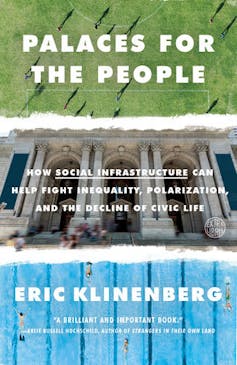
Palaces for the People by Eric Klinenberg, 2018
by social scientist Eric Klinenberg was a stand-out book for me.
In the context of rapid urbanisation across Africa with significant investment in hard infrastructure like water and sanitation, the book introduces the notion of social infrastructure 鈥� shared physical places and institutions that shape social life 鈥� as critical for healthy societies. These range from outdoor green spaces like parks to indoor shared spaces like public libraries.
These are spaces that support physical activity and connection across social divides. Investing in this type of infrastructure can reap the benefits of social inclusion as well as physical and mental health.
Penguin Random House
The book also highlights social infrastructure鈥檚 potential to improve urban resilience. For instance, Klinenberg researched a heat wave in Chicago that killed hundreds of people. He found that while poor neighbourhoods had the highest death rates overall, neighbourhoods that looked like they should have fared badly but had some of the lowest death rates also had strong social infrastructure. This included sidewalks and well-maintained streets, libraries and community organisations that drew people out of their homes into public life in normal times.
In the heatwave crisis, this infrastructure helped to identify and reach out to particularly vulnerable people and to prevent death.
The COVID-19 pandemic has highlighted the critical role that public space can play in addressing or aggravating pre-existing inequality, with public spaces that were usually the domain of cars . This highlights the unmet demand for such places in our cities.
The book supports the notion that a core dimension of any 鈥済ood city鈥� is public space, an important mediator of equitable access to health-promoting opportunities. In that vein, I would argue that a good city is one in which planning of public space integrates health and climate resilience with principles of equity and inclusion to enhance urban resilience and health-proof the future of the city and its population.
Several cities across the 第一吃瓜网 continent have recently developed resilience and climate action plans with mitigation and adaptation strategies. The book is a reminder that alongside hard infrastructure, planned interventions should not neglect social infrastructure as a powerful approach to equitably creating health.
Christa Kuljian
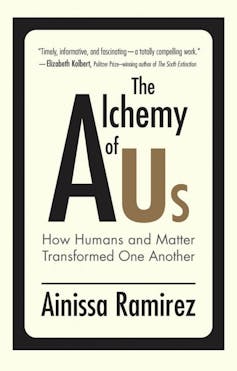
The Alchemy of Us: How Humans and Matter Transformed One Another, 2020
Materials scientist Ainissa Ramirez loves her field, which she says is not widely known because it is wedged between physics and chemistry. Ramirez鈥檚 book explores eight stories of how humans and matter transform one another.
The stories of clocks, steel rails, copper cables, photographic film, light bulbs, and silicon chips show how these technological and scientific developments have shaped human culture. 鈥淚 use storytelling with the hopes of bringing the wonder and fun of science to more people,鈥� says Ramirez.
The MIT Press
In 1966, the Polaroid Corporation created the system that produced two instant photographs in one minute for official documents, without a darkroom and added chemicals. Polaroid began to sell this film to the South 第一吃瓜网 government under apartheid, to create ID photos for passbooks. In 1970, chemist Caroline Hunter, an 第一吃瓜网 American employee at Polaroid, caught wind of the sales, and led a protest that ultimately resulted in the company鈥檚 withdrawal from South Africa. This is just one of the fascinating stories Ramirez tells about photographic film. In each of her eight essays, she introduces us to new perspectives, forgotten innovators, and the unintended consequences of scientific discoveries.
By showing many inventors as human and flawed, rather than as geniuses, Ramirez makes science more accessible. Everyone can create something, she says, 鈥渇rom a sandwich to a solar cell鈥�, so stories of science need to reflect the fact that innovation is universal. As Ramirez suggests in her front matter, perhaps the famous science fiction novelist was thinking of materials science and The Alchemy of Us when she wrote: 鈥淎ll that you touch, you change. All that you change, changes you.鈥�
Abiodun Egbetokun
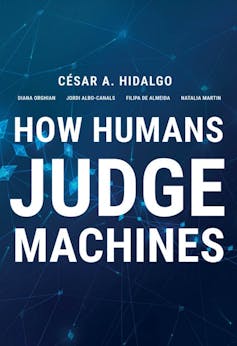
How Humans Judge Machines by C茅sar Hidalgo, Diana Orghian, Jordi Albo-Canals, Filipa De Almeida and Natalia Martin, 2021
is the outcome of experimental social research carried out at the .
It has an important message for today鈥檚 world: humans need a balanced view of machines. We tend to be biased against machines. For instance, if there is an accident involving self-directed technology such as an autonomous car, humans are more likely to reject the technology as unviable before even considering that the engineers may have made a design mistake that led to the accident in the first place.
Why is this important? We are now in a world driven by technologies. As the technology frontier continuously shifts forward, devices and solutions keep getting better. If we are biased against technologies, we may resist or reject technological solutions that could improve social welfare.
As explained in the book, a medical diagnosis tool that is not perfectly accurate but is more accurate than human doctors may be rejected if technology failures are perceived with a strong negative bias. Conversely, if we are overly optimistic about technological solutions, we may adopt hostile technology and fail to recognise the negative consequences until it is too late.
There are many reasons I find the book valuable. First, it is based on solid, peer-reviewed science. The experiments presented in the book involved nearly 6,000 randomly selected individuals. Even academic articles sometimes fail to meet this standard of representations and scrutiny. Second, the book deals with a topical issue: how to efficiently foster profitable interaction between human and machine in the Fourth Industrial Revolution. This is one question that policymakers worldwide grapple with, and the book provides clear answers.
The MIT Press
Third, the book is multidisciplinary; its insight is rooted in different knowledge traditions. Such insight is practical and free from disciplinary bias. The scenarios compare people鈥檚 reactions to human and machine actions across the five dimensions of moral psychology, and visit contemporary issues such as algorithmic bias, privacy and labour markets.
Finally, it is written in clear language for a general audience. I believe that most readers will enjoy reading this book as much as I have.
, Commissioning Editor, . This article is republished from under a Creative Commons license. Read the .